This week's NullG work covered the five rebuilt XL ships, weapon effects, split-screen and the learning pilots. There's also a first playable slice of WipEout Pulse. I've put the ships and all eleven XL weapon types into a new video:
The XL ships
FEISAR, AG Systems, Auricom, Qirex and Piranha now have rebuilt geometry and physically based materials, with more detail around the cockpits, engines and moving control surfaces. The Blender article covers how the models were reconstructed with the assistant and reviewed.
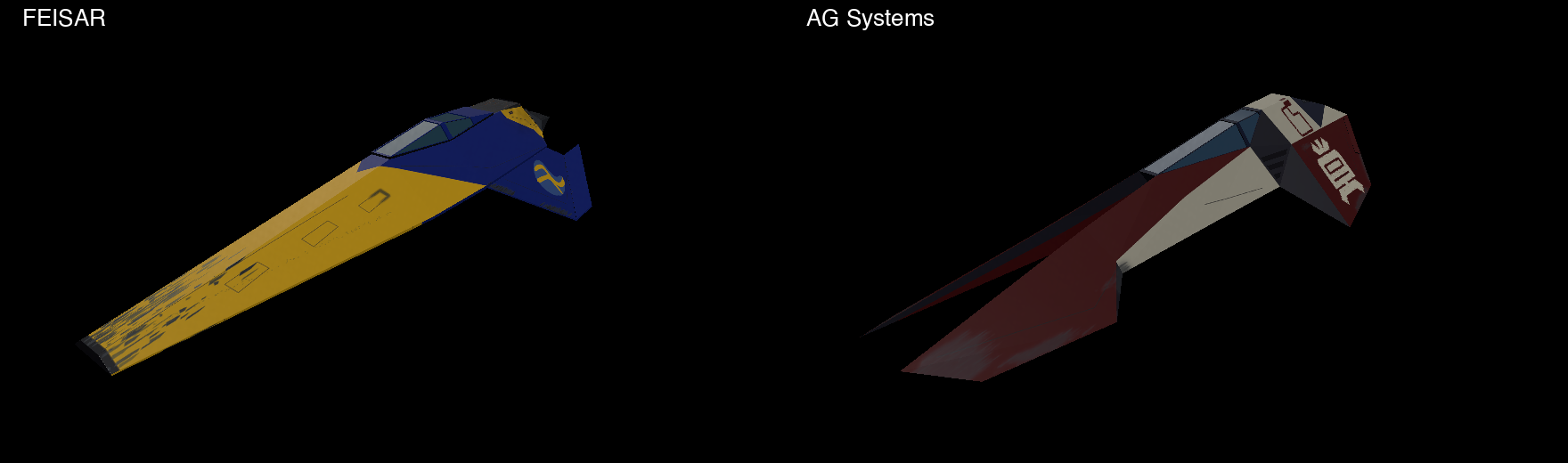
A still render only tells part of the story with the moving parts. Qirex has a broad hull to clear when its surfaces move, while the thin surfaces on AG Systems and Piranha needed further refinement. This week's changes included those clearance and thickness checks, then reviews under the menu and track lighting.

For the racing footage I used the newest completed RL checkpoint available when capture preparation started on October 25. It was an experimental pace-training checkpoint on simulation revision 48, still unaccepted for gameplay. I wanted the video to show where the training had reached that day.
All eight racers in each recorded field use the same saved policy, so continuing the training couldn’t change the driver halfway through recording. This week's training work also covered difficulty objectives, rewards, checkpoint retention and resuming earlier runs. The RL page explains how the pilot produces steering, throttle, airbrake, pitch and weapon inputs.
Shields and weapons
The shield now has an animated surface around the hull, with the ship and engine flare visible through it. The close-up shows the surface moving while the ship stays visible underneath.
For the weapon shots I used controlled demonstrations with granted inventory. Rockets, missile and electrobolt show their launch, flight and impact; mines, quake, plasma and energy bomb show the larger track effects. Turbo, autopilot and the energy pack have their activation and status feedback too, making eleven types including the shield. The mine sequence also places a live mine to demonstrate the impact.
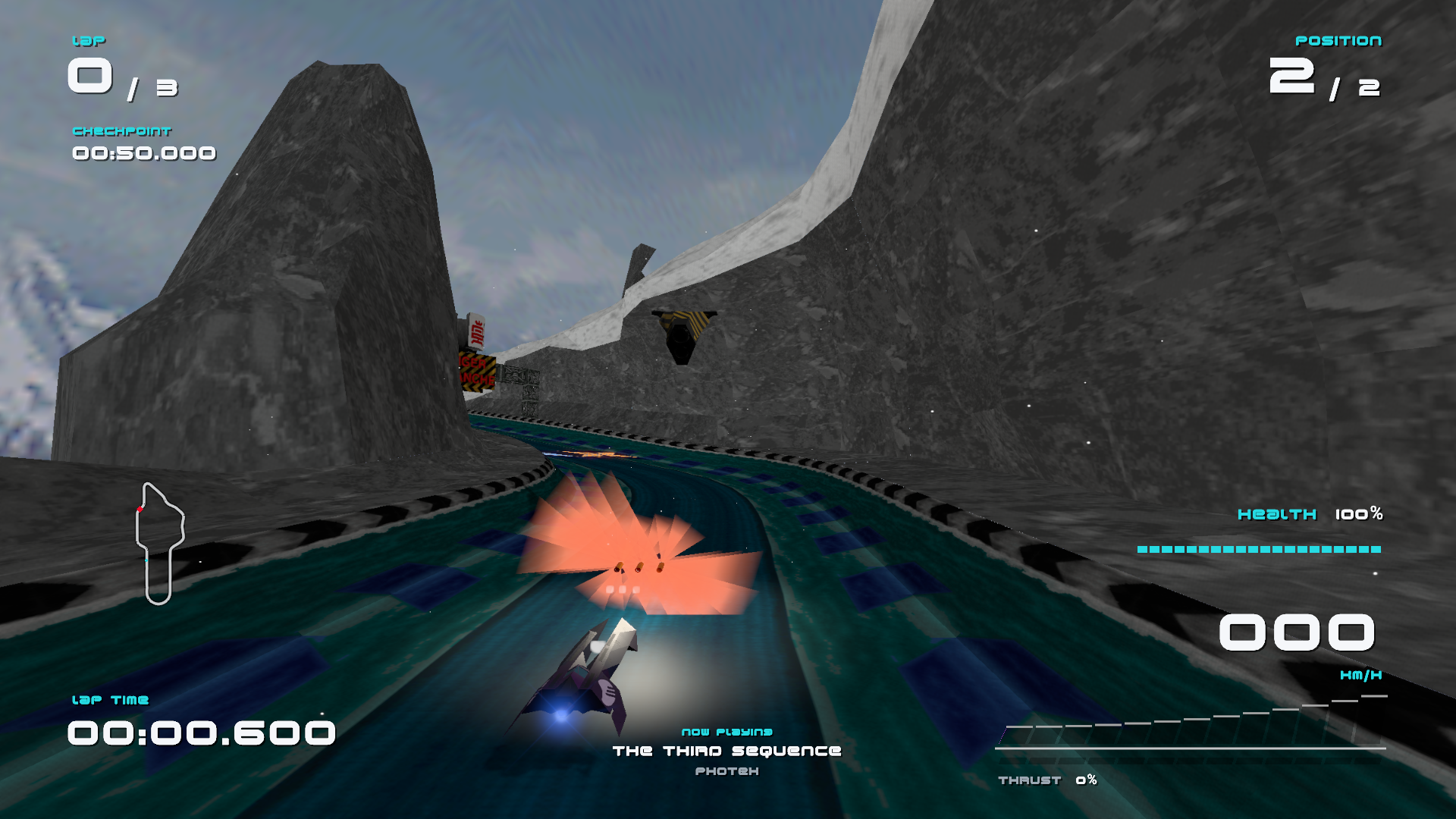
Targeting trails, status placement and effect draw order also had fixes. The video uses chase, cockpit and wider views, and the XL camera handoffs and results view needed some stabilization work.
There was also work on preparing assets and keeping textures available on the GPU. Menus, inspection views and races use the shared lighting and effects; the architecture page explains how that fits together.
Split-screen
I've changed the HUD layout to fit each player's viewport. The top readouts stay at the top, speed and thrust sit near the bottom, and status information stays around the edges. That leaves more of the road visible in both horizontal and vertical layouts.
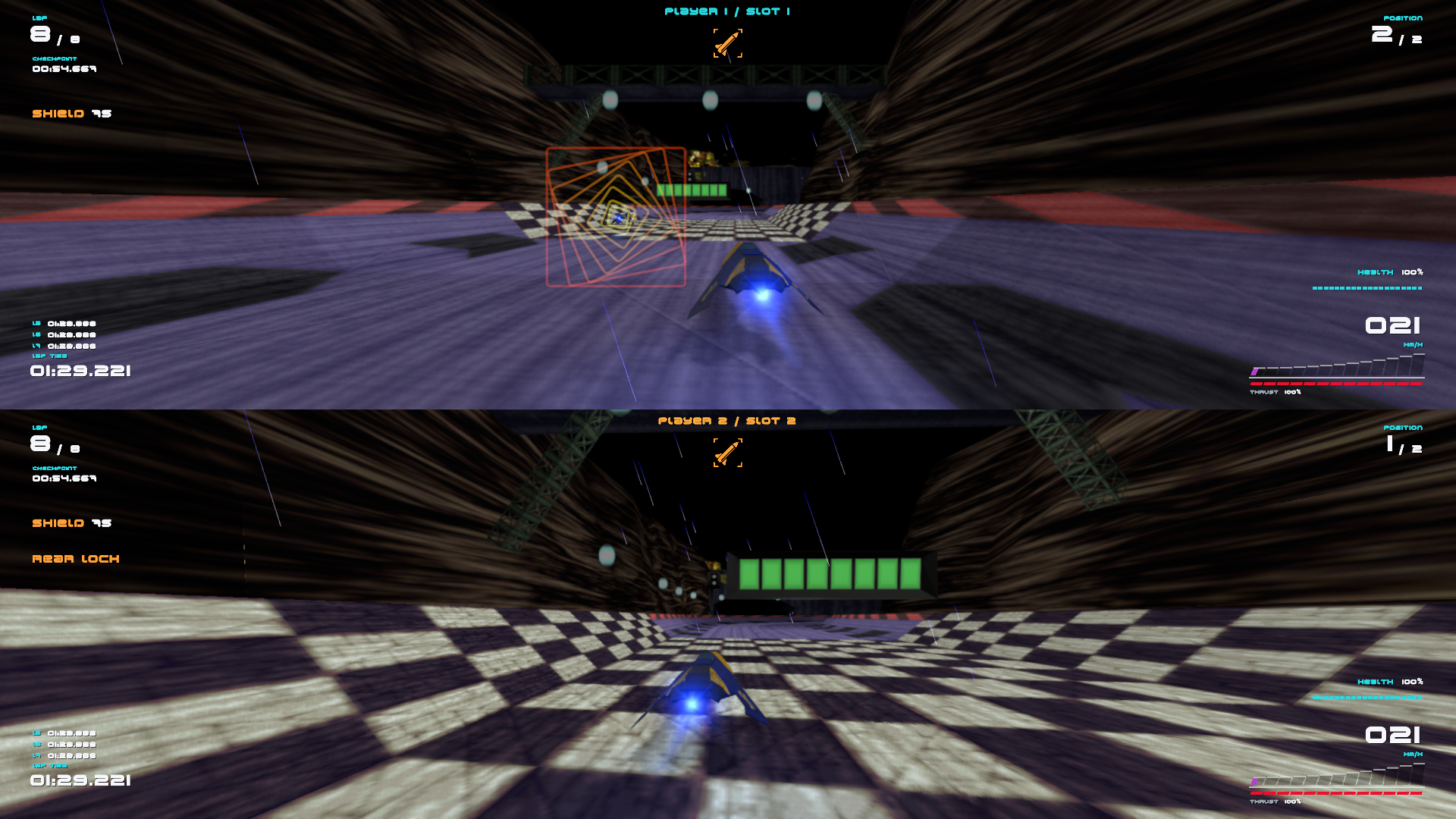
Weapon, shield and lap states were staged here to check the two-player HUD layout.
HD2097 is used for the racing labels and large figures. Brighter numbers and colored labels distinguish the shield countdown, health, boost and thrust, while compact text keeps names and results readable in the smaller views. Targeting trails and weapon feedback stay with the relevant player's camera.
Three-player mode now uses the spare quadrant for a circuit map and live standings, including lap and speed information. The numbered ship markers, legend and standings use the same colors for each local player.
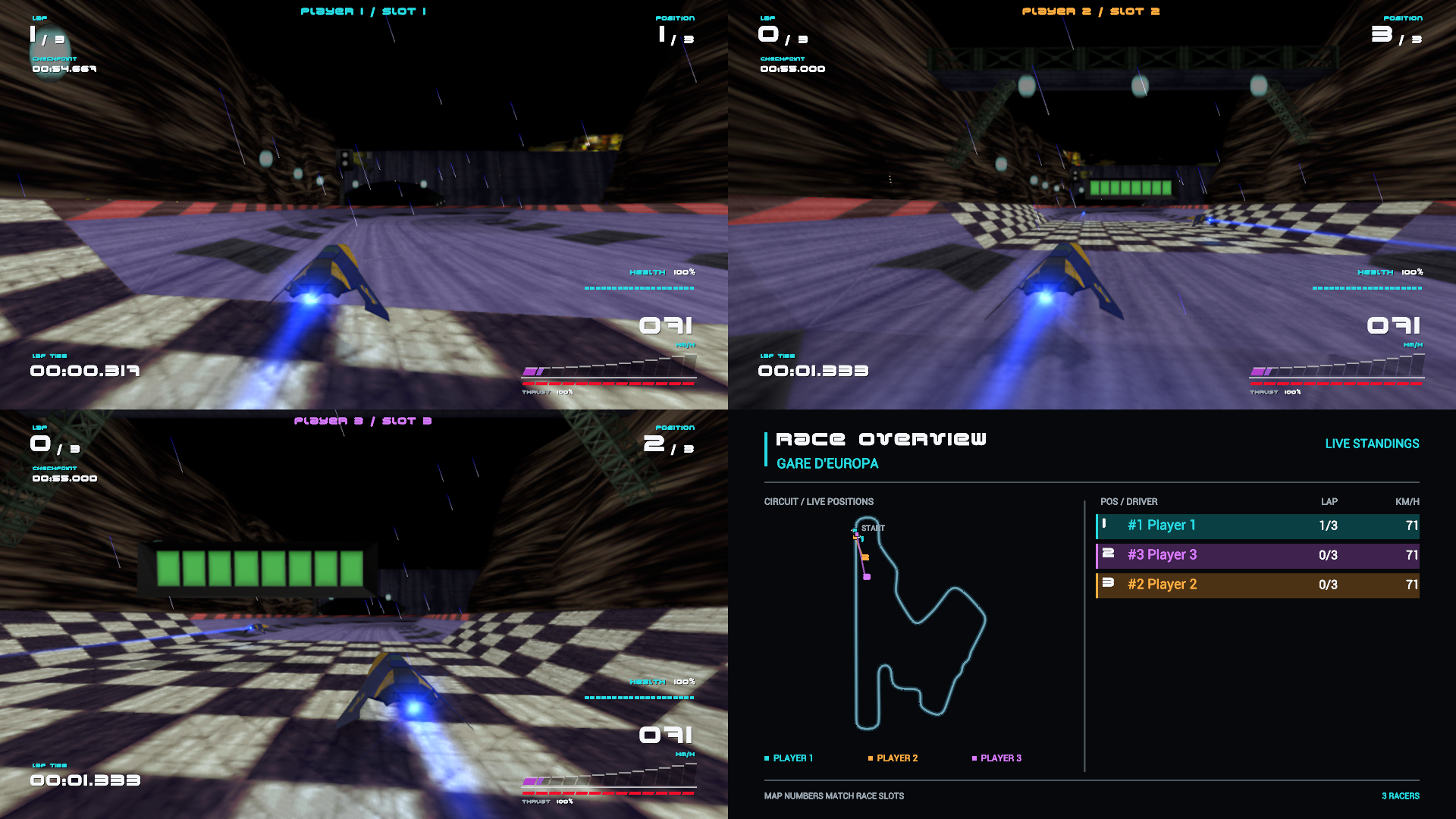
Finished and retired racers have their own result states, with each driver's results kept inside their view. The multiplayer page covers the rest of the local and network setup.
A first Pulse race
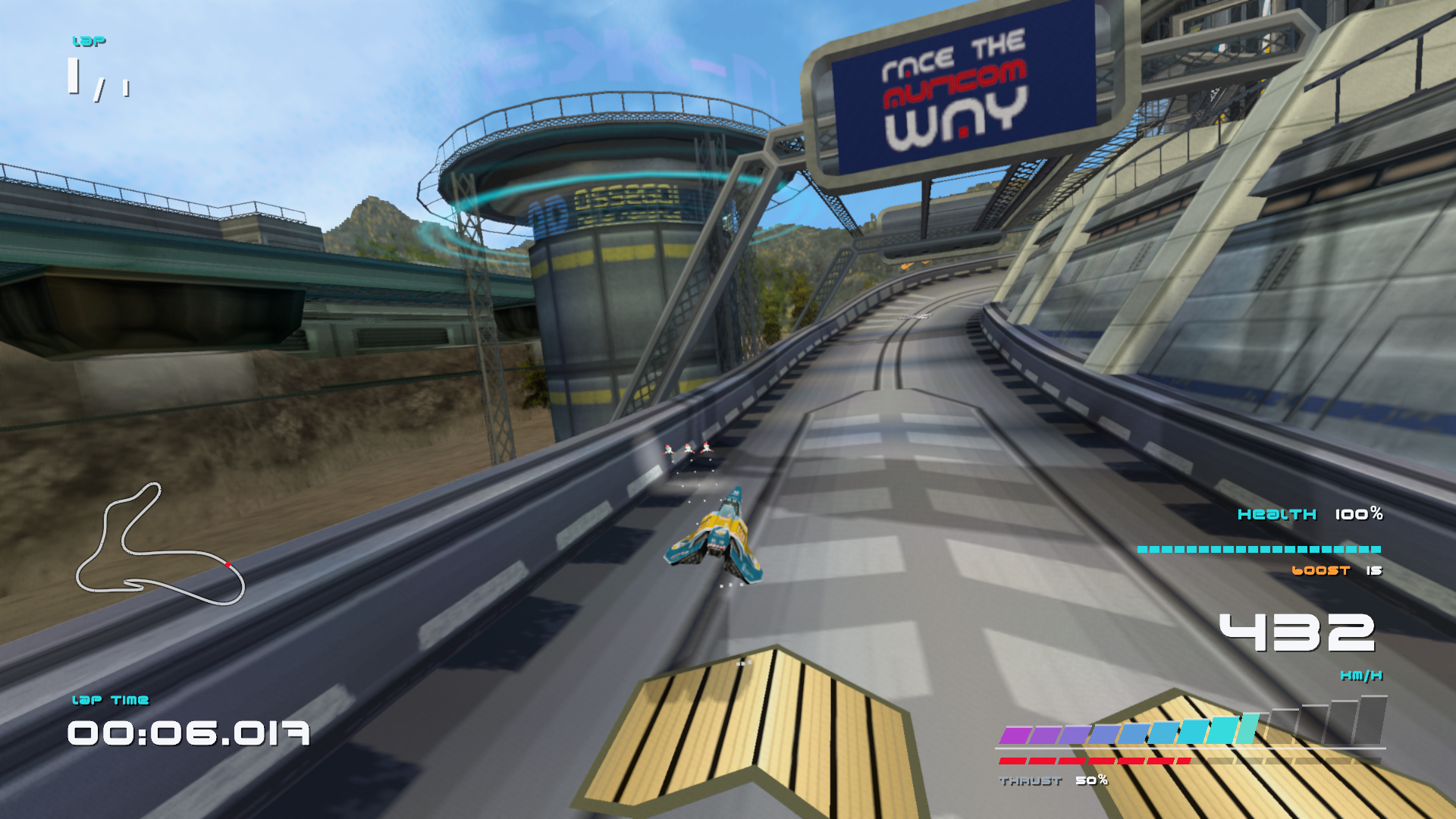
For this update, the playable Pulse preview is Talon's Junction White, FEISAR and Venom. It goes through the normal import and menus into a one-lap Time Trial or a Single Race against seven native opponents, with difficulty selectable in Race Setup.
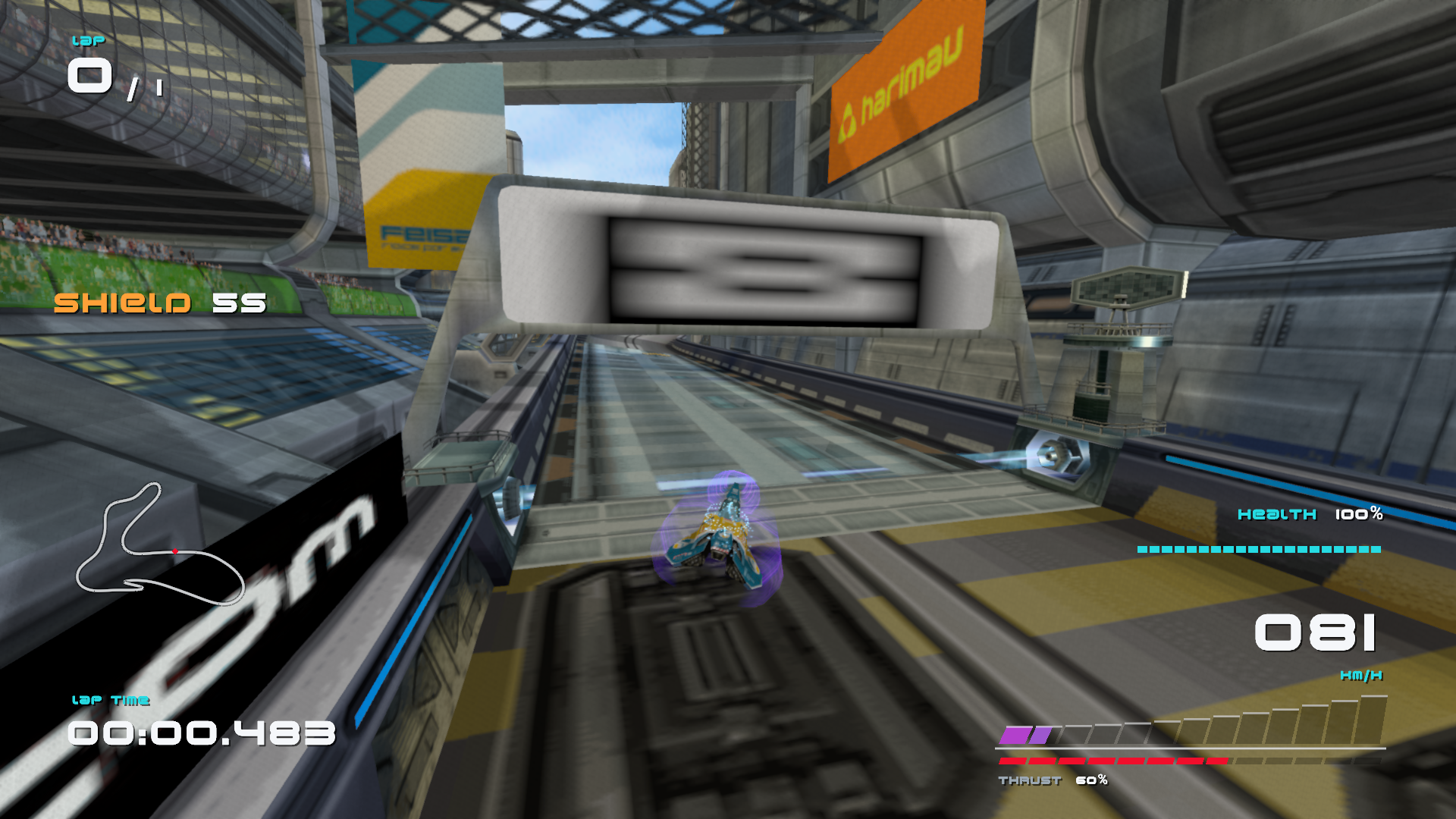
Getting that combination running involved grid placement, the countdown and launch behavior, steering, airbrakes and the sideshift gesture. Banking and barrel-roll visuals are in, along with a chase camera that follows the track horizon and feedback for landings, wall contact and recovery.
Time Trial gives you a Turbo at the start/lap line. It uses the normal weapon controls and common HUD, and can be absorbed for energy. Ship and track contact feed into the shared damage handling.
Pulse's Shield and three-shot Rocket bursts are connected to the models, rendering and HUD, though the weapon work is still incomplete. Tests covered shielded and unshielded encounters, and all eight racers completed a lap in the validation run. The weapon screenshots use inventory granted by the inspection tool.
Pure is further back, at the import stage. The shared PSP work decodes geometry, materials, textures, collision and animation data while keeping each game's content separate. CPU loader checks cover 16 Pure track layouts and 24 Pulse layouts, and the ship metadata covers eleven Pure ships and eight Pulse ships, including their dependent resources. Sound-bank voices and soundtrack resources have also been decoded and checked.
Those numbers describe what the loaders can read, not a list of playable content. Pulse is the preview described above; Pure isn't at that point yet. The imports feed the existing model cache, staged GPU uploads and track streaming. Pulse imports are checked in a separate installation before being activated in the asset library.
Working with the inspection tools
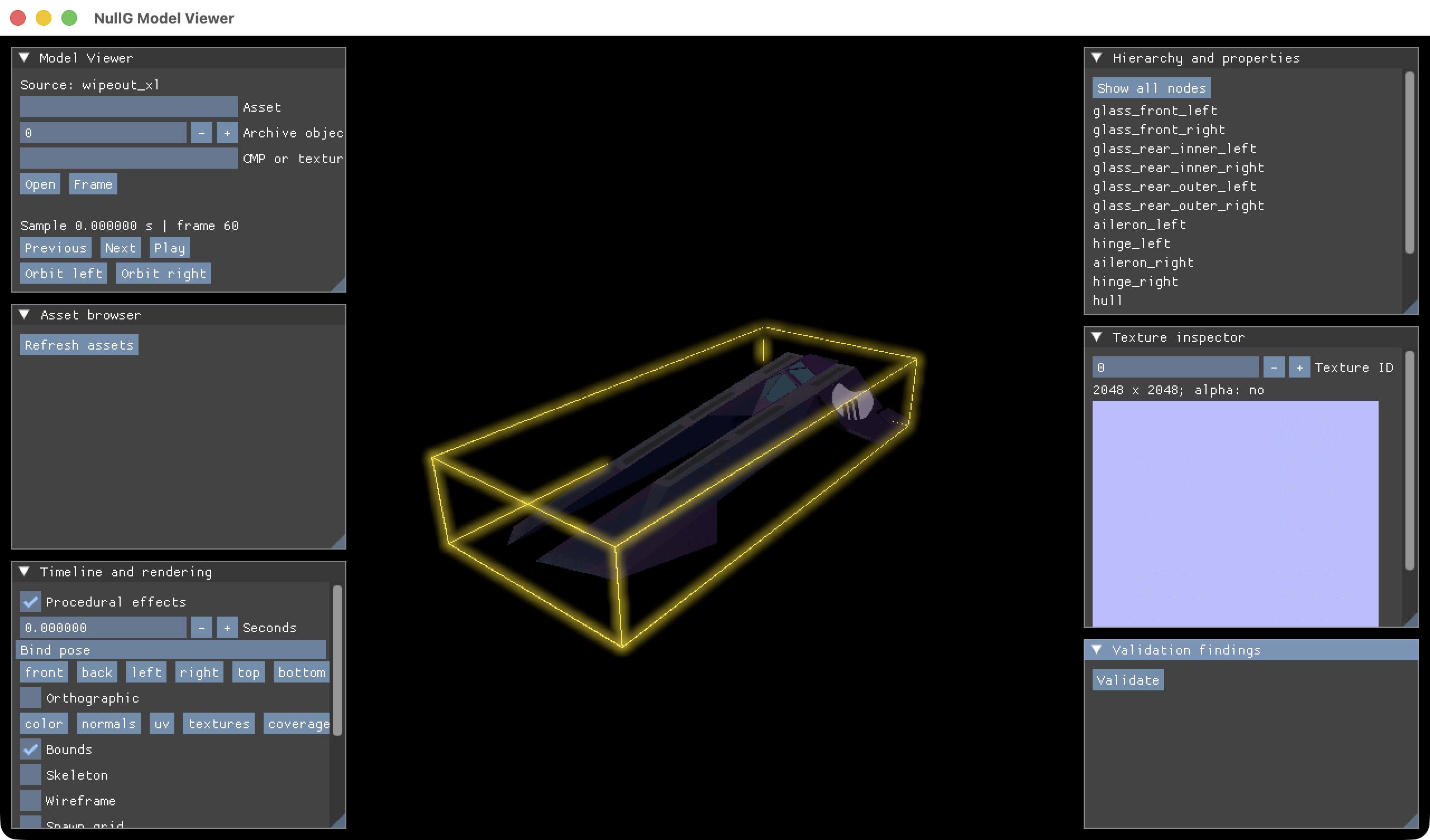
A lot of the model and weapon work is done with the engine paused. The MCP harnesses let an agent or script operate the native tools: load a model, position the camera, pose a control surface, inspect its state and save a frame.
For the fleet, that means going from Blender to the engine's Model Viewer, checking materials and movement, then checking the menus and a race. A control surface can look fine in Blender and still need a clearance adjustment when the engine applies steering or an airbrake.
The weapon harness starts a paused production race and grants a selected weapon. It can then advance the simulation a few frames at a time. A snapshot saved before firing allows the same setup to be restored, with ship state, timers and events available beside the pictures. The demonstration still goes through the game's firing and rendering paths.
Pulse now has a couple of useful feedback probes too. One starts the ship above the road with downward velocity and lets hover and collision produce the landing. Another moves it beyond the track so the recovery controller has to respond. The reports record the racer, time and magnitude of the resulting feedback, giving a repeatable case to inspect.
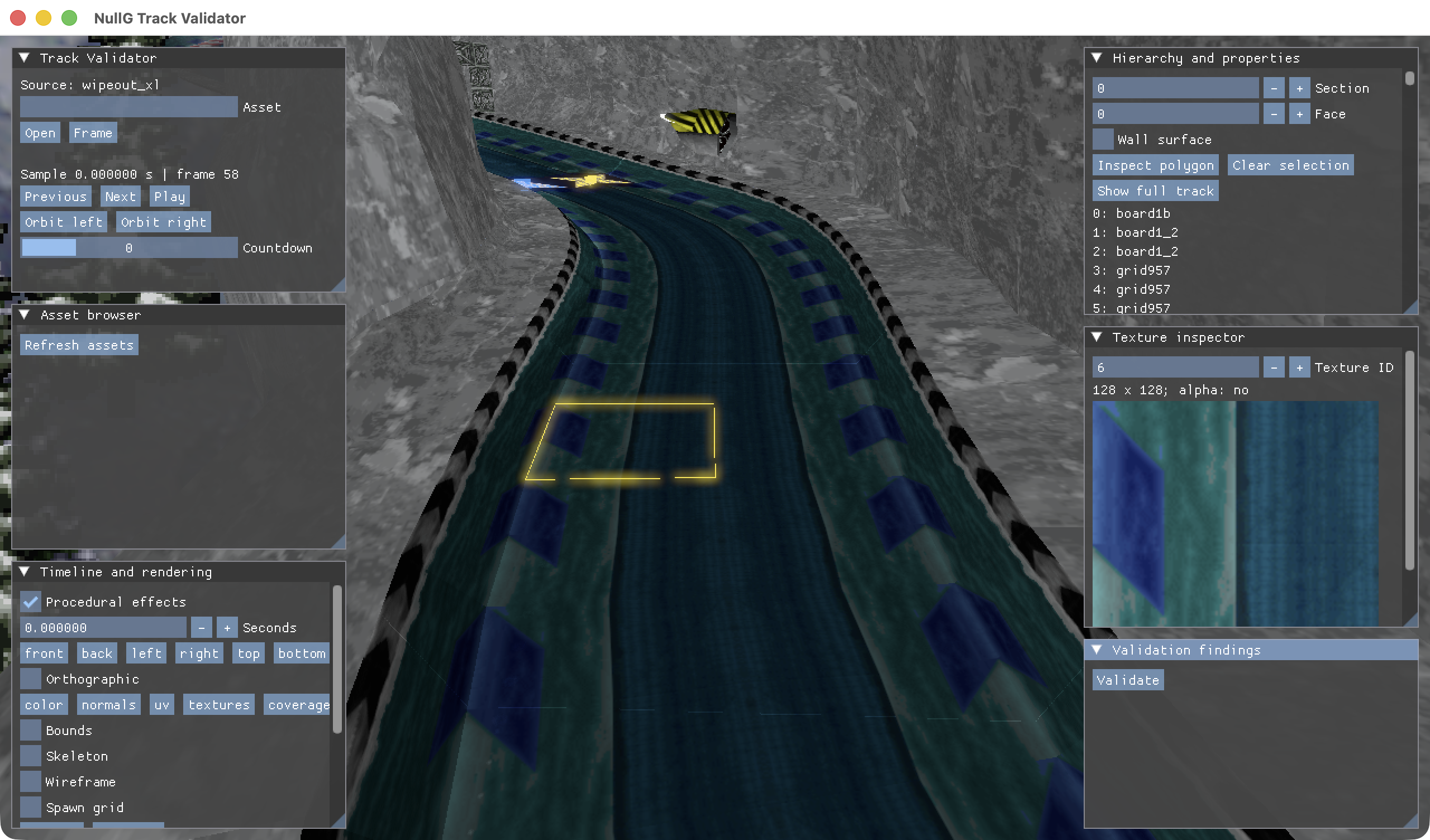
The replay tools let the camera work happen after the race is recorded. The saved inputs and reports make the captures repeatable, and the same race can be used for landscape and portrait edits. There's more on the harnesses on the MCP tooling page.
The music work this week included playlist playback and track announcements, as well as Zero G Chokehold, On Fire and the Warehouse Rage track used in the video. NullG's original soundtrack is generated with Suno.
WipEout names, designs and imported game content belong to their respective owners. These images show that content and its reconstructed presentation in NullG.