Split-screen and network play can be combined in NullG, so several people on one machine can join a race with players elsewhere. Local races support two to four players, and network sessions work over LAN or through online private rooms. Everyone keeps their own ship choice, camera and HUD.
The lobby stays open while players join and choose ships. Four local player cards are each controlled by the device that joined them, with a rotating ship preview; remote players appear separately. Ready locks a player's choices, and Unready allows editing again.
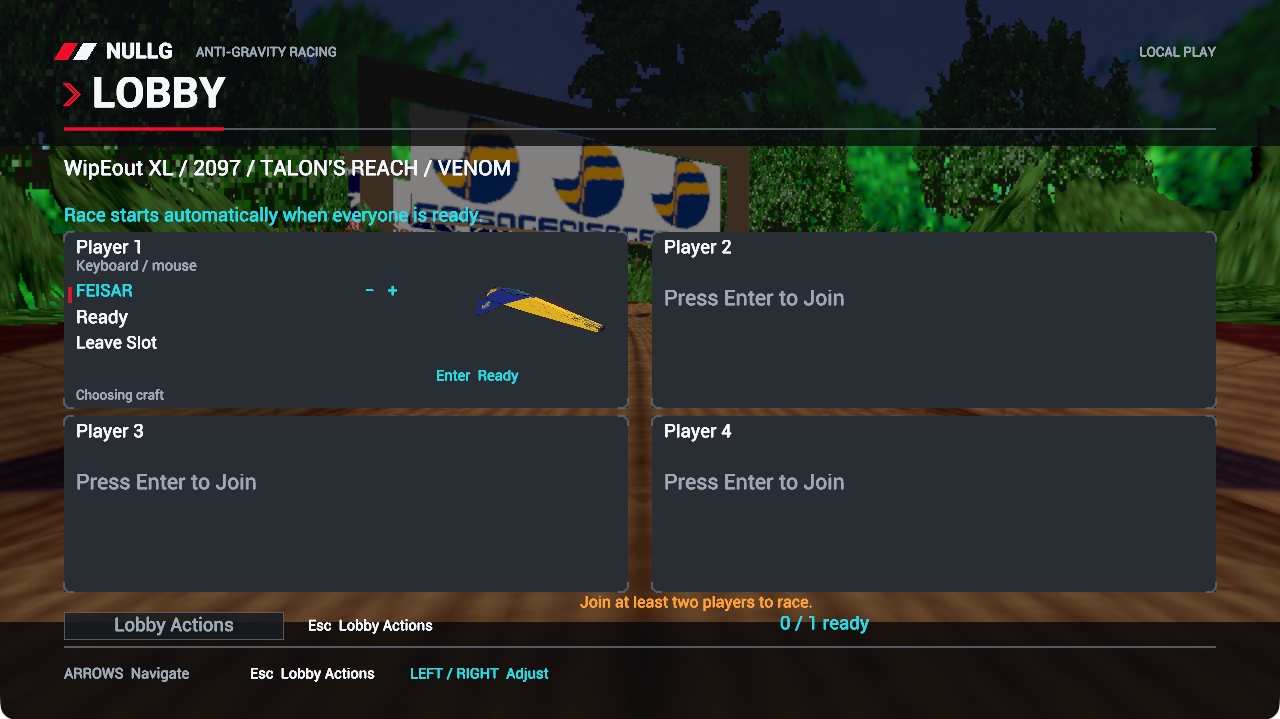
The host can adjust the event before applying it to the lobby. Apply Changes sends the complete setup to everyone; Cancel leaves the current event alone. Changing the event clears everyone's Ready status so the other players can review it. The race starts automatically when everyone's ready and the connection and content checks pass. After the results, everyone returns to the same lobby with their connections and ship choices intact, ready to confirm the next race.
Sharing a screen
Two players can use a horizontal or vertical split, saved as a game option. Three and four players use quadrants. With three players, the spare quarter shows a track map and live standings, using the same player colors as the race views.
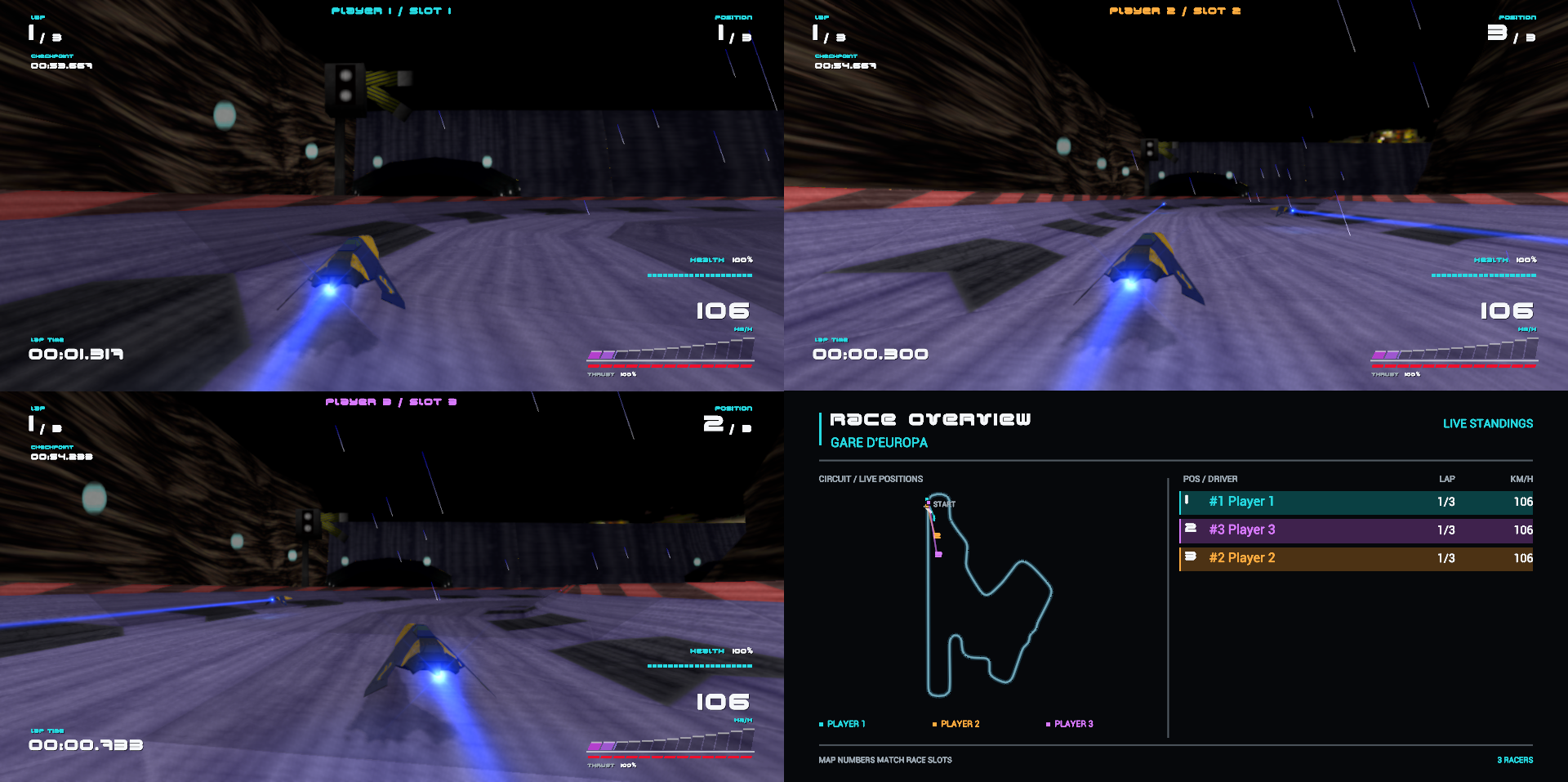
Each player has an independent camera, HUD, pause controls, results and rendering history. The HUD places lap and position at the top, speed and thrust below, and status indicators around the edges. It renders at output resolution, so reducing scene resolution doesn't blur the text and gauges.
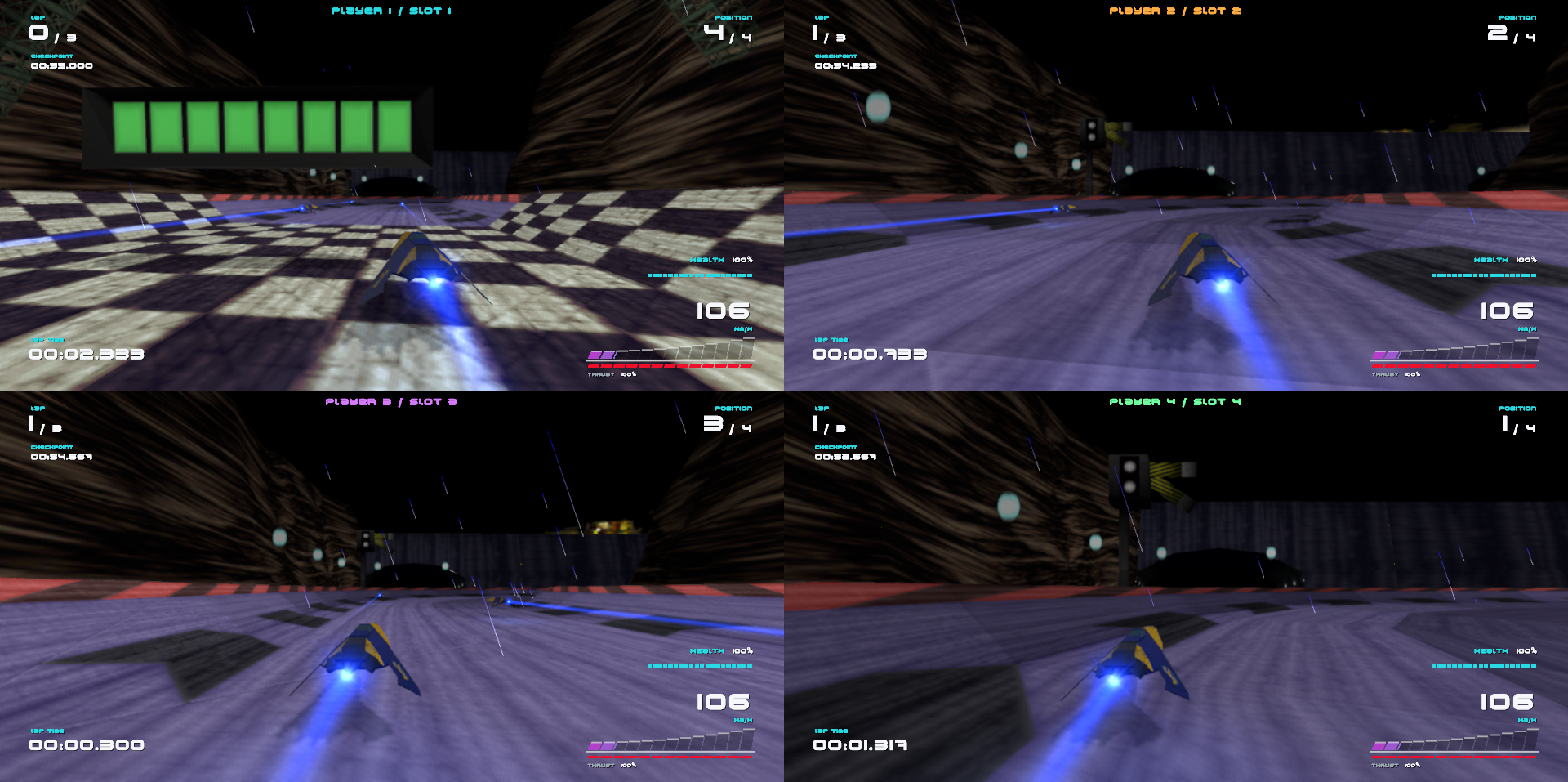
Scene preparation, particles and immutable uploads are shared across views. Lighting and post-processing run per camera. Extra views still increase rendering cost, but they don't duplicate the simulation or change its fixed timestep.
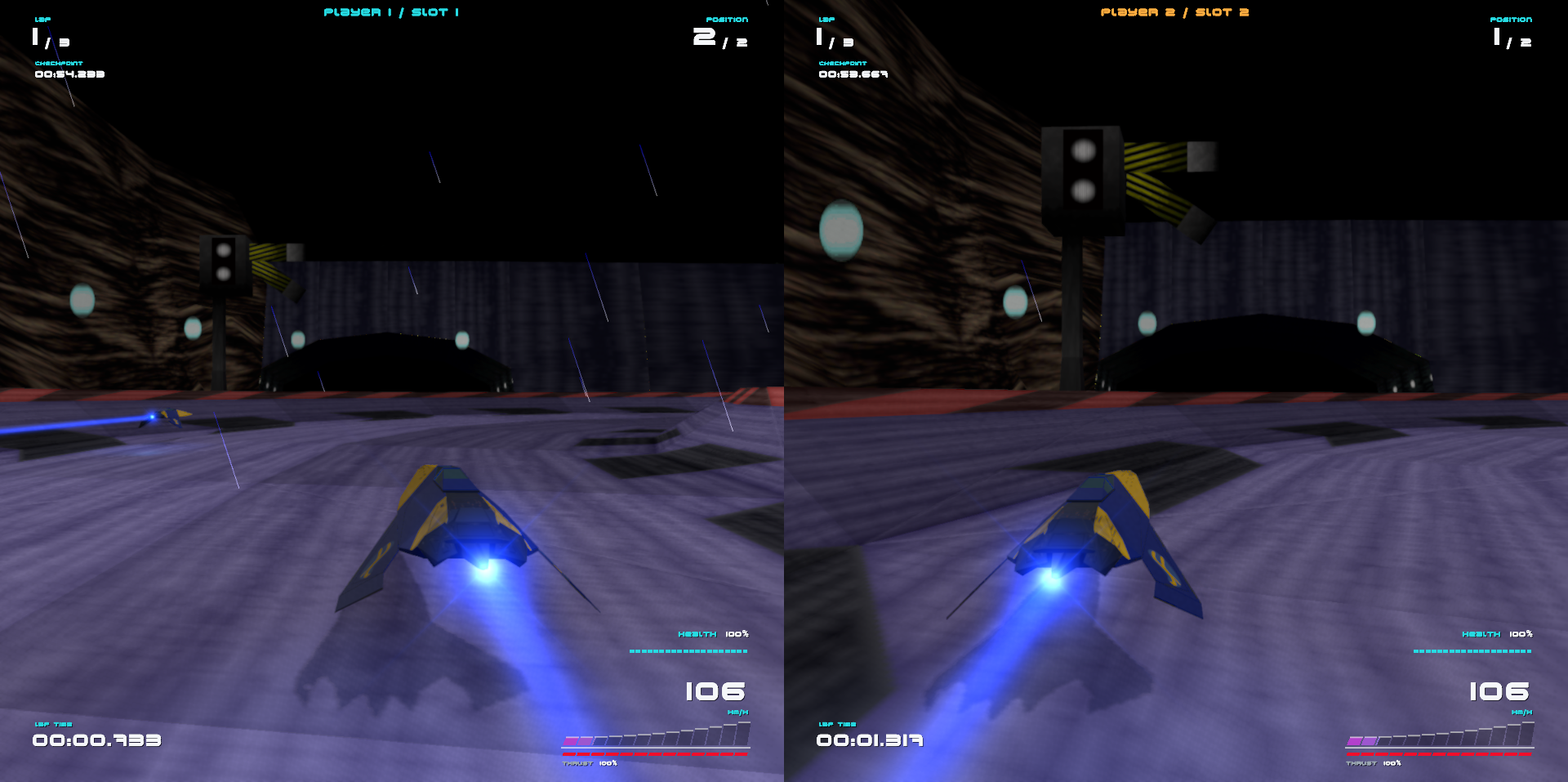
The race screenshots here use scripted controller input to show the layouts.
Left and right views occupy matching parts of the stereo mix; top and bottom views stay centered. Shared sounds are managed across views as players join.
LAN and online play
LAN rooms appear automatically in the LAN menu. The host chooses the event and runs the authoritative simulation, and joining machines need compatible game content.
Online private rooms use a shared room code. Signaling brings the machines together, then encrypted game channels carry the session over a direct or relayed connection. Game content stays on each machine, with fingerprints checking gameplay-critical source data before the race starts.
Keeping controls responsive
Waiting for a round trip to the host before responding to steering would make driving awkward. Clients predict their local movement, then reconcile it with updates from the host. Other racers are interpolated between updates. The host has the final say on collisions, pickups, weapons, AI, race progression and results.
Lobby changes, confirmed events and results use reliable ordered delivery. Controls and movement use replaceable state updates, with redundant inputs and duplicate-action checks. This lets a newer position update supersede an old one without losing a confirmed race event.